Wednesday, January 25, 2012

Cynthia Nixon Labels Her Homosexuality a "Choice"


Cynthia Nixon finds herself in a bit of trouble within the gay community.

The actress - best known for her role as Miranda on Sex and the City, and in a committed relationship with Christine Marinoni - is profiled this week in The New York Times and tells the newspaper:

“I gave a speech recently, an empowerment speech to a gay audience, and it included the line ‘I’ve been straight and I’ve been gay, and gay is better.’ And they tried to get me to change it, because they said it implies that homosexuality can be a choice. And for me, it is a choice."

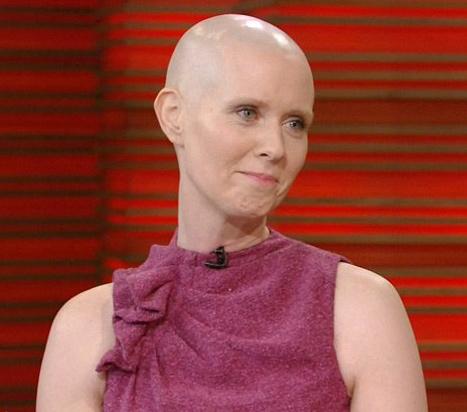
Cynthia Nixon Bald

Cynthia Nixon has shaved her head for a role in a Broadway play. But that's not why the actress is making headlines.

Nixon made these comments around the same time Washington became the seventh state to legalize gay marriage, and she doesn't see her viewpoint as contrasting with the stance of many activists.

“A certain section of our community is very concerned that it not be seen as a choice, because if it’s a choice, then we could opt out," the actress says. "I say it doesn’t matter if we flew here or we swam here, it matters that we are here and we are one group and let us stop trying to make a litmus test for who is considered gay and who is not.

"I am very annoyed about this issue. Why can’t it be a choice? Why is that any less legitimate? It seems we’re just ceding this point to bigots who are demanding it, and I don’t think that they should define the terms of the debate."

What do you think of Nixon's comments?

Source: http://www.thehollywoodgossip.com/2012/01/cynthia-nixon-labels-her-homosexuality-as-a-choice/

auburn football auburn football costumes seth macfarlane bobby flay clemson football the new girl

Tuesday, January 24, 2012

Federer wins 1,000th match, will face Nadal (AP)

MELBOURNE, Australia ? A dominating win by Roger Federer in his 1,000th career match and a more difficult workout for Rafael Nadal set up a rare Grand Slam marquee semifinal between the former top-ranked players.

Four-time Australian Open champion Federer advanced to his ninth straight semifinal at Melbourne Park with a 6-4, 6-3, 6-2 quarterfinal win Tuesday over Juan Martin del Potro, the man who beat him for the U.S. Open title in 2009.

Federer's 1,000th match was similar to most in his career ? no-nonsense, dominating from the start and hitting some incredible shots.

"It's a lot of matches and a lot tennis," said Federer, a record 16-time Grand Slam champion. "Either I have been around for a long time or I'm extremely fit. You decide which way you want to describe it. But I'm happy."

In an often tempestuous night match at Rod Laver Arena, Nadal advanced with a tough 6-7 (5), 7-6 (6), 6-4, 6-3 win over Tomas Berdych.

"Happy with how I finished match physically, I was able to keep running with high intensity," Nadal said.

Federer and Nadal ? they were ranked 1-2 for many years ? have been on opposite halves of the draw since the 2005 French Open. That was the last time the pair met in a Grand Slam semifinal, won that year by Nadal in four sets.

"The ranking is important, but we are talking about a player who has won 16 Grand Slams, and I've won 10," Nadal said.

"We have played a lot of matches together, many in very important moments for our careers. So the matches against him are always special, even if we are (ranked) 20 against 25."

Defending women's champion Kim Clijsters, still dealing with a left ankle injury, advanced to an Australian Open semifinal against third-seeded Victoria Azarenka by beating No. 1 Caroline Wozniacki 6-3, 7-6 (4) Tuesday. Clijsters' victory ensured that Wozniacki would lose the top ranking she has held for most of the last 15 months.

Azarenka beat No. 8 Agnieszka Radwanska 6-7 (0), 6-0, 6-2. Azarenka is one of three women who could finish at No. 1 in Melbourne ? Maria Sharapova and Petra Kvitova are the others.

In the late match, Nadal saved four set points in the first set, including one on an amazing crosscourt passing shot on the 29th point of a rally. But Berdych held firm to win the ensuing tiebreaker.

During the tiebreaker, a Berdych shot landed out, and Nadal returned it, then challenged. Chair umpire Carlos Bernardes wouldn't allow the challenge because Nadal hadn't immediately stopped play, but Nadal responded by saying he didn't challenge immediately because he thought the linesman had called it out.

The replay showed the ball was out.

"Carlos, I'll tell you something, you never get one right, not one correct overrule," Nadal said in Spanish. "You're not here as a spectator. You know that ball was out."

Nadal was still debating the issue at his post-match news conference.

Later in the match, Bernardes had a brief discussion with Berdych when the Czech player complained about an apparent "flat" ball. And in the fourth set, Nadal chastised the chair umpire again for allowing a challenge by Berdych, feeling the Czech player waited too long before asking for a review.

In the opening game of the fourth set, Nadal hit consecutive down-the-line forehands to break Berdych's service and the Spaniard was on his way to clinch the match in 4 hours, 16 minutes.

Nadal said he changed his strategy after losing the first set.

"I started moving a little bit inside the court after I went 20 meters behind the baseline, just trying to find solution," Nadal said. "At the end of the match, I finished it returning fantastic."

Berdych said his performance "was only good, which means that is not enough with Rafa."

Federer's career can be enhanced even more if he wins the title this year at Melbourne Park. With a 232-34 record in Grand Slam singles matches, he can overtake Jimmy Connors' mark of 233 wins if he collects the title here.

Del Potro, who has recovered from the right wrist injury that sidelined him for most of 2010, played well in flashes. But Federer was at another level, hitting lobs, drop shots, crosscourt winners and generally negating Del Potro's big forehand.

"We have played some big matches against each other, so just knowing how well he's been playing as of late, I was just hoping that I would get off a good start," Federer said. "I was able to mix it up well and control the ball, and right away sort of felt confident."

The end of the match came in a most fitting way, one of Federer's backhand winners.

Before that, Federer saved his fourth break point at 5-3 in the second set after a long rally. He let out a loud yell, unusual for a player not prone to big shows of emotion.

"That's why I didn't celebrate when I won the set, just to make it up," Federer said, smiling. "I really knew how important that game was for me."

The quarterfinals on the other side of the men's draw are Wednesday ? Andy Murray plays Kei Nishikori of Japan and top-seeded Novak Djokovic takes on David Ferrer.

In the remaining women's quarterfinals Wednesday, Sharapova plays Ekaterina Makarova, who beat five-time champion Serena Williams in the fourth round, and No. 2 Kvitova takes on unseeded Sara Errani of Italy.

Clijsters has needed treatment on her ankle since Sunday, when she injured it and had to save four match points in her fourth-round win over French Open champion Li Na, a rematch of the 2011 final.

"Instead of really focusing on the match, you're focusing on trying to get the ankle as good as possible," Clijsters said of her preparation. "Laying on the couch, every 20 minutes ice, 20 minutes off, 20 minutes ice, 20 minutes off. Leg elevated. Lymphatic drainage, all that stuff."

Wozniacki, 21, needed to reach the semifinals to retain the top ranking.

"I will get it back eventually, so I'm not worried," she said. Critics "talk to me like I'm finishing my career and I only have one year left and time is running out. The fact is I still have quite a few good years in front of me."

Source: http://us.rd.yahoo.com/dailynews/rss/sports/*http%3A//news.yahoo.com/s/ap/20120124/ap_on_sp_te_ga_su/ten_australian_open

diphtheria del rio del rio das racist das racist ginger white conrad murray sentencing

Obama signals State of Union a campaign rallying call (Reuters)

WASHINGTON (Reuters) ? President Barack Obama, offering a glimpse of next week's State of the Union address, made clear on Saturday that he will deliver a starkly partisan election-year call for a "return to American values" of economic fairness.

"I'm going to lay out a blueprint for an American economy that's built to last," Obama said in a campaign video sent to supporters. "And most importantly, a return to American values of fairness for all, and responsibility from all."

A reference to values is usually political code for social and religious issues, a rallying cry for conservative Republicans who want to deny the Democratic president a second White House term in November.

But Obama, who delivers his annual State of the Union address to Congress on Tuesday night, is running for re-election on his claim of being a champion for the middle class, while trying to paint Republicans as the party for the rich.

"We can go in two directions. One is towards less opportunity and less fairness. Or we can fight for where I think we need to go: building an economy that works for everyone, not just a wealthy few," Obama said.

He is expected to use the speech to repeat calls for higher taxes on the wealthy, tax breaks to bring American manufacturing jobs home, steps to aid the housing market, and another nudge to China on currency flexibility to aid U.S. exports.

Republicans, who were holding a closely watched primary election in South Carolina on Saturday to help select their nominee to face Obama, say he is an old-fashioned tax-and-spend liberal whose policies hurt business and jobs.

Obama's suggestions are therefore unlikely to make much headway in Congress, where Republicans control the House of Representatives.

Attacking congressional Republicans on their own turf, during a prime-time televised joint session of Congress, signals a de-emphasis on appeals for cooperation that have marked Obama's previous State of the Union addresses.

Obama campaigned in 2008 on a message of reaching across the political aisle to change the way that Washington works, but now complains that Republicans have obstructed his efforts to collaborate and are only interested in seeing him fail.

Republicans say they oppose his policies because they view them as bad for the country, and say they are willing to work with the president on areas of genuine common ground.

FED UP

Polls show Americans are fed up with gridlock in Washington, but tend to blame congressional Republicans more than the president for the state of affairs.

Obama said he would focus on American manufacturing "with more good jobs and more products stamped with Made in America," American energy, and skills for American workers as key parts of his plans for the economy.

"They're big ideas, because we've got to meet this moment. And this speech is going to be about how we do it," he said.

He is expected to emphasize incentives to encourage lenders to refinance underwater mortgages, which would ease a crucial obstacle to a recovery in housing and the broader economy.

He has also said he will put forward tax breaks to reward companies that bring jobs home to the United States, while eliminating tax benefits that outsource jobs overseas, and has repeatedly stressed wealthy Americans should pay more in taxes.

Obama has proposed a so-called Buffett rule, named after the billionaire Warren Buffett, who supports the president and says it is unfair that he pays a lower tax rate than his secretary because most of his income is taxed as capital gains.

Mitt Romney, a top Republican contender to face Obama and one of the richest politicians to vie for the nomination, this week disclosed he paid a tax rate of around 15 percent, because most of his income comes from investments.

Republicans say Obama is playing the politics of envy and what Americans really care about is jobs.

Voters do rate the economy as one of the most important factors in the upcoming election, and while U.S. growth has picked up, it remains fragile and unemployment, at 8.5 percent, is still high by historical standards.

Obama departs on Wednesday for a five-state, three-day tour to promote the framework he will highlight in the address, including visits to Las Vegas and Denver that were hit hard in the housing downturn, and to Detroit, home to the U.S. auto industry that Obama helped rescue through a taxpayer bailout.

(Reporting By Alister Bull; Editing by Vicki Allen)

Source: http://us.rd.yahoo.com/dailynews/rss/business/*http%3A//news.yahoo.com/s/nm/20120121/pl_nm/us_usa_obama_speech

when does ios 5 come out christopher columbus trina the green mile the green mile james whitey bulger elizabeth warren

Monday, January 23, 2012

Deepak Chopra: Cancer: A Preventable Disease Is Creating a ...

Cancer is the most dreaded of all diseases, and ever since a "war on cancer" was declared 40 years ago, massive research has made progress, although the battle is far from won. Very little of this research has been directed at prevention. Advanced medicine, like the person on the street, has tended to think of cancer as something we have no control over: It happens to us or it doesn't.

Visualization is courtesy of TheVisualMD.com

The reason for thinking this way can be seen under a microscope, which reveals that malignant cells are misshapen compared to normal cells. Disastrous mutations at the genetic level lead to abnormal cell division, causing cancer cells to become rogues in the body, multiplying without check, crowding out normal cells, and in general wreaking havoc by losing communication with the body's fine-tuned intelligence.

Yet we may be seeing a revolution in our whole approach to cancer. Some highly-placed researchers now believe that 90-95 percent of cancers are preventable with drastic lifestyle changes. This represents a total reversal from what used to be taught in medical school, which held that only 5 percent of cancers could be traced to environmental factors like diet or chemical toxins. If the new view is correct, then for the first time we may have found an open road to ridding society of its most dreaded scourge.

To begin with, the genetic trail hasn't led to a cure, only to greater and greater complications. A disease like breast cancer, when examined at the genetic level, isn't one disease but hundreds. Yet at the opposite extreme, genetic mutations may be playing a much smaller part than anyone ever thought. Craig Venter, who led a private effort to successfully map the human genome, neatly summarizes the situation:

"Human biology is actually far more complicated than we imagine. Everybody talks about the genes that they received from their mother and father, for this trait or the other. But in reality, those genes have very little impact on life outcomes. Our biology is far too complicated for that and deals with hundreds of thousands of independent factors. Genes are absolutely not our fate."

In some cancers, inheritance certainly plays a major factor. For example, childhood cancer, of which the most common is a form of leukemia, has a simpler genetic profile than adult cancers. By targeting specific mutations, doctors who treat childhood cancer have raised their success rate from 20 percent to 80 percent in the past 40 years. Children with cancer must undergo severe regimens of chemotherapy and radiation, but it's no longer a case, as it once was, of killing the tumor before the treatment killed the patient.

For a vast majority of oncologists, targeting a malignant cell with chemo and radiation, along with surgery to remove the tumor, remains the mainstream approach. The track of prevention is all but unknown to them. There is no doubt that a cell has to mutate in order to become cancerous. Yet an inherited mutation isn't the same as an acquired mutation, one that develops during the lifetime of the patient. Let's simplify the case and divide acquired mutations into two types: those that result from accident and errors on the part of a person's DNA, and those that are linked to lifestyle. The revolution that is looming in cancer is based on believing that the lifestyle link is so strong that it accounts for 90 percent or more of cancer occurrences.

Let's pursue this line of reasoning with the expectation that doing everything you can to prevent cancer is clearly the best choice.

What medicine refers to as environmental and lifestyle factors include some familiar culprits: overweight, lack of exercise, poor diet, smoking, overuse of alcohol and overexposure to UV and other forms of radiation. Of all cancer-related deaths, it's thought that 25-30 percent are due to tobacco; 30-35 percent are linked to diet; and about 15-20 percent are due to infections, many of them preventable.

What is cancer?

Cells in adults normally have tightly-controlled patterns of growth. They divide in a regulated manner and have definite lifespans. Because of this, the number of cells in a healthy body remains roughly the same over time.

Cancer cells, however, display uncontrolled growth. The rate of division is faster in some cancers than in others, but in all cancers, the cells never stop dividing. In effect, they have infinite lifespans. Malignant tumors invade neighboring tissues and may metastasize, spreading to distant parts of the body. Cancerous tumors have the ability to produce activator molecules, such as vascular endothelial growth factor. Activator molecules induce the formation of new blood vessels to supply the tumor, allowing for cell reproduction and tumor growth.

Cancer is not one but hundreds of different diseases. Breast cancers, for instance, have individual characteristics and display different patterns of growth than lung cancers. That's why a cancer that originates in the breast and metastasizes to the lungs is referred to as metastatic breast cancer, not lung cancer.

How does cancer begin?

Cancer begins when a cell undergoes a mutation: one or more of its genes are damaged or lost. A number of different mutations have to happen before the cell becomes a cancer cell. If a cell carries a mutation, it usually either destroys itself or is recognized as being abnormal by the immune system and killed. This is why cancer usually occurs in older people: There has been more time for mutations to occur and for exposure to cancer-causing agents.

Genes may be damaged by:


  • Free radicals produced in the normal process of metabolism

  • Carcinogens, such as radiation, chemicals, tobacco, and infectious agents

  • Random errors in DNA replication

  • Inherited mutated genes

Almost from the time they first arise, cancerous tumors shed cells into the bloodstream. In fact, it's estimated that a 1-cm tumor sheds more than a million cells into the circulatory system in just 24 hours. Most of these cells are killed by cells of the immune system or die due to injury, but some may survive. Traveling cancer cells may become stuck in a capillary and adhere to its lining. From there they penetrate into surrounding tissues or organs, where they may generate secondary tumors. Cancer cells may also penetrate into the lymphatic vessel and travel in the circulating lymph fluid until it becomes lodged in the small channels inside a lymph node.

Cancer prevention

That the vast majority of cancers are not caused by genetic defects means that in most cases we have the power to modify or eliminate most of the factors that lead to it.

Most of the known risk factors for cancer have one thing in common: they create chronic (long-term) inflammation in the body. Inflammation is a normal part of your body's immune system response to injury. Problems arise when that inflammation becomes chronic. When that happens, levels of many potent inflammatory chemicals go up. These substances include cytokines (including TNF, IL-1, and IL-6), enzymes (such as COX-2 and 5-LOX), and adhesion molecules. All of these various chemicals have been linked to the development of cancerous tumors, and chronic inflammation precedes tumor growth in most types of cancer.

Solutions

Obesity, smoking, alcohol, infectious agents and carcinogens in food and in the environment have been shown to cause chronic inflammation in the body. The longer the inflammation continues, the greater the risk of cancer.

Maintain a healthy weight

There's a clear link between obesity and cancer. It's thought that, in the U.S., excess weight or obesity cause 14 percent of cancer deaths in men and 20 percent of cancer deaths in women. Obesity is linked to many cancers, including cancers of the colon, breast, endometrium (uterine lining), esophagus, and kidneys.

Clearly, it's important to keep your weight at a healthy level to help prevent cancer. It's important for other reasons as well. You can also prevent the many co-morbidities of obesity, including diabetes, high blood pressure, cardiovascular disease, fatty liver disease and osteoarthritis.

Exercise to protect yourself against cancer

Numerous studies have shown that being physically active exerts a protective effect against cancer. Regular exercise lowers levels of IGF-1, a cytokine implicated in tumor growth, and other cytokines in the bloodstream. Interestingly, it does this even if the person who exercises is overweight and remains overweight. The lower levels of these cancer promoters are one possible explanation for the protective effect of regular exercise.

Exercising regularly reduces a woman's chances of getting breast cancer, possibly because doing so lowers blood levels of insulin and estrogen. Risk of colon cancer, too, is greatly reduced when you exercise, probably because being active decreases the amount of time it takes food to pass through the intestines. That means the colon is in contact with potential carcinogens for a shorter period of time.

Eat anti-cancer foods

It's estimated that diet causes about one-third of all cancer cases, almost as many as tobacco. Because cancer is so strongly associated with chronic inflammation, eating foods that fight inflammation can have a chemoprotective effect.
Chief among cancer-protective foods are fruits and vegetables. They contain numerous cancer-preventing, anti-inflammatory chemicals, including:

  • Carotenoids, especially lycopene, found in watermelon, guava, grapefruit, and tomatoes
  • Resveratrol, found in grapes, peanuts, and berries
  • Quercitin, found in red grapes, citrus fruits, tomatoes, broccoli, and leafy green vegetables as well as tea and wine
  • Sulforane, found in cruciferous vegetables such as broccoli


Cancer-fighting chemicals are found in teas and many spices, including:

  • Green tea
  • Turmeric
  • Garlic
  • Chilies
  • Ginger
  • Fenugreek
  • Fennel
  • Clove
  • Cinnamon
  • Rosemary

Whole grains contain potent antioxidants and are rich in fiber, which speeds the transit of food through the colon. Eating whole grains has been found to reduce the risk of colorectal cancer.

Don't smoke or use tobacco in any form.

In the U.S., 30 percent of cancer deaths are due to tobacco. That smoking causes lung cancer is well known; it's less known that tobacco use increases the risk for at least 14 different types of cancer. Smoking combined with drinking increases the risk of cancer synergistically. Smokeless tobacco, touted as a "safer" alternative, is responsible for 400,000 cases of oral cancer worldwide -- 4 percent of all cancers.

Drink alcohol only in moderation

If you drink alcohol, do so in moderation, if at all (two drinks a day for men, one a day for women). Chronic alcohol consumption is a risk factor for cancers of the upper respiratory and digestive tracts, including cancers of the mouth, throat, and esophagus, as well as for cancers of the liver, lung, and breast. Risk goes up with increasing consumption.

Avoid UV radiation

Skin cancer is extremely common and frequently fatal, if it isn't caught in time. Both sunlight and artificial sources of UV radiation (like tanning beds) are dangerous. Avoid peak radiation hours during the day (10 a.m.-4 p.m.) if possible. If you can't avoid being out in the sun, wear a hat and cover exposed areas. Use a broad-spectrum sunscreen with a sun protection factor (SPF) of at least 15. And don't use indoor tanning beds or sunlamps.

Get immunized

I realize that vaccination, once the pride of preventive medicine, has become a hot-button issue. There are popular movements that attribute many kinds of risks to being vaccinated. Let me simply give the accepted protocol here. Vaccination won't be a priority in cancer prevention, but a thorough approach, as dictated by some oncologists, would target specific cancers through being immunized against them. Human papillomavirus (HPV) is a sexually transmitted virus that can lead to cervical cancer. A protective vaccine is recommended for girls ages 11-12 and for girls and women ages 13-26 who haven't completed the full vaccine series. Hepatitis B can increase the risk of developing liver cancer. All babies and some high-risk adults should be vaccinated.

For many people, these lifestyle changes are so drastic that adopting them will take time, patience, and knowledge. The threat of heart attack, stroke, and diabetes hasn't been potent enough to cause wide swaths of the public from giving up bad lifestyle choices. Now we find that cancer can be added to the list, so far as some researchers are convinced of the link between cancer and environment.

You aren't called on to become a cancer expert. But weighing all the evidence, it's clear which way the wind is blowing. The likelihood that cancer is not enmeshed with lifestyle is diminishing year by year. Yes, cancer is immensely complicated, but everything you can do to support your body's innate intelligence is a positive step in allowing that intelligence to block the cellular changes that create malignancy. A decade from now, I expect that we will tune in and find that this ray of hope has become even brighter.

For more health information from Deepak go to www.deepakchopra.com.

For more by Deepak Chopra, click here.

For more on cancer, click here.

?

?

?

Follow Deepak Chopra on Twitter: www.twitter.com/DeepakChopra

Source: http://www.huffingtonpost.com/deepak-chopra/cancer-information_b_1219678.html

conjugated linoleic acid world series schedule apple earnings tampa weather pat buchanan susan sarandon susan sarandon
Mitt Romney?s rough week ? in one graph (Washington Post)

Share With Friends: Share on FacebookTweet ThisPost to Google-BuzzSend on GmailPost to Linked-InSubscribe to This Feed | Rss To Twitter | Politics - Top Stories News, News Feeds and News via Feedzilla.

Source: http://news.feedzilla.com/en_us/stories/politics/top-stories/189040207?client_source=feed&format=rss

angus t. jones belgian malinois girl fight jacoby brissett danielle staub last of the mohicans last of the mohicans

Sunday, January 22, 2012

Army investigates video of sheep beating

By msnbc.com staff

Army officials are investigating a graphic video of a sheep being beaten with a baseball bat by what appears to be?U.S. service members in Afghanistan, The Army Times reported?Thursday.

The report comes a week after another inflammatory?video surfaced on the Internt?that purports to depict four U.S. Marines urinating on the corpses of Taliban fighters ? a?clip that both Defense Secretary Leon Panetta and Afghanistan President Hamid Karzai condemned as deplorable. An investigation is ongoing.


In the 30-second video, a sheep with horns?is?dragged into a large room and is clubbed 10 times with a metal bat by a man in dark civilian clothes amid laughter and cheering. One person is seen in the background jumping up and down. No attempts are made to stop the beating.

According to The Army Times, military commanders in Afghanistan have condemned the incident, and an Army criminal investigation has been launched. The video reportedly first surfaced in November, but it's unclear when the incident occurred.

"We are aware of a Live Leak video depicting the killing of a sheep," spokesman for the International Security Assistance Force told The Army Times in an email. "The actions of those involved are not condoned or supported in any way. We are currently assessing the situation to determine more information."

PETA posted the video on its website and?contacted Army officials, prompting?an investigation.?

"PETA did what it always does when someone blows the whistle on these incidents of gratuitous cruelty: We wrote to Secretary of the Army John McHugh and then, when no answer was forthcoming, to other high-ranking officers, including Chief of Public Affairs General Stephen Lanza and Commanding General of the U.S. Army Criminal Investigation Command David E. Quantock," the animal welfare agency stated on its website.??

More content from msnbc.com and NBC News

Source: http://worldnews.msnbc.msn.com/_news/2012/01/19/10193743-army-investigates-video-of-sheep-beating-in-afghanistan

cl p cl p andy rooney andy rooney groupon ipo groupon ipo breeders cup 2011

Saturday, January 21, 2012

Cruise ship wreck rescuers race against clock

Vincenzo Pinto / AFP - Getty Images

The Costa Serena (up), the sister ship of the wrecked Costa Concordia, passes, on January 18, 2012, past the aground liner off the Isola del Giglio (Giglio island). International cruise goers put on a brave face as Costa's first Mediterranean tour since last week's tragedy set sail out of the same port near Rome as the doomed luxury liner.

By msnbc.com news services

GIGLIO, Italy -- A scuba team is prepared to go inside the wrecked Italian cruise liner, according to NBC News' Michelle Kosinski.

The recovery team is racing against the clock to complete the search for victims of the disaster before the weather turns and salvage crews need to start pumping fuel from the wreck. The search is expected to focus on the fourth deck, around an evacuation assembly point where seven of the bodies found so far were located. Kosinski reports that the search team has been using sonar to look at the sea floor as well.

One of the specialist diving crews said on Thursday the available window to complete the search could be as small as 12-24 hours although the chief spokesman of the rescue services denied that any deadline had been set and said the situation was still evolving.

The Costa Serena, the sister ship of the Costa Concordia, passed the partially-sunken liner on Wednesday evening. International cruise goers put on a brave face as Costa's first Mediterranean tour since last week's tragedy set sail out of the same port near Rome as the doomed luxury liner.

Meanwhile, a new audiotape emerged Thursday of the first contact between Livorno port officials and the Costa Concordia ? and the captain is heard insisting that his cruise ship only had a blackout a full 30 minutes after it had rammed into a reef.

The recording between Capt. Francesco Schettino and port officials began at 10:12 p.m. Friday, more than 30 minutes after the ship violently hit a reef and panicked passengers had fled the dining room to get their lifejackets.

Recordings of Schettino's conversations with coast guard officials after the ship crashed on its side have shown how he resisted repeated orders to return on board to oversee the evacuation.

In the recording, Schettino is heard assuring the officer that he was checking out the reasons for the blackout. But he doesn't volunteer that the ship had hit a reef.

Rather, the port officer tells Schettino that his agency had heard from a relative of one of ship's sailors that "during dinner everything fell on their heads." That was an apparent reference to the plates and glasses that slammed down onto passengers in the main dining room.

"We are verifying the conditions on board," Schettino replies. Asked if passengers had been told to put on life jackets, he responds: "Correct."

Crew members and passengers have said Schettino ate dinner with a woman in the ship's restaurant Friday and was reportedly with her as the ship started listing off the island of Giglio.

Italian news reports say prosecutors want to speak to Dominica Cermotan of Moldova. Cermotan says in a Facebook post that she was with Schettino on deck along with other officers and the cruise director. She defended Schettino, telling Moldova's Jurnal TV that "he did a great thing, he saved over 3,000 lives."

Crew members returning home have begun speaking out about the chaotic evacuation, saying the captain sounded the alarm too late and didn't give orders or instructions about how to evacuate passengers. Eventually, crew members started lowering lifeboats on their own.

"They asked us to make announcements to say that it was electrical problems and that our technicians were working on it and to not panic," French steward Thibault Francois told France-2 television Thursday. "I told myself this doesn't sound good."

He said the captain took too long to react and that eventually his boss told him to start escorting passengers to lifeboats. "No, there were no orders from the management," he said.

Identifying victims
On Thursday, seven of the dead were identified by authorities: French passengers Jeanne Gannard, Pierre Gregoire, Francis Servil, 71, and Jean-Pierre Micheaud, 61; Peruvian crew member Thomas Alberto Costilla Mendoza; Spanish passenger Guillermo Gual, 68, and Italian passenger Giovanni Masia, who news reports said would have turned 86 next week and was buried in Sardinia on Thursday.

The first victim was identified on Wednesday as crewmember Sandor Feher, 38, of Hungary. Jozsef Balog, a pianist who worked with Feher, a violinist, told the Budapest newspaper Blikk that Feher was wearing a lifejacket when he decided to return to his cabin to pack his violin. Feher was last seen on deck en route to a lifeboat. According to Balog, Feher helped put lifejackets on several crying children before returning to his cabin.

The children of Barbara and Jerry Heil, a Minnesota couple aboard the ship that have been missing since the accident, said Wednesday in a blog posting that their parents are not among those passengers whose bodies were recently recovered.

DigitalGlobe

The Costa Concordia ran aground Jan. 13 off the coast of Italy, resulting in the evacuation of thousands of passengers as the ship began heavily listing.

Rougher seas
Six days after the 114,500-ton Costa Concordia capsized off the Tuscan coast, hopes of finding anyone alive on the partially submerged hulk have all but disappeared and the cold waters around the ship have become noticeably rougher.

Eleven people are known to have died and 21 people are still unaccounted for out of more than 4,200 passengers and crew aboard when the ship struck a reef just yards from the shoreline, tearing a large gash in the side of the hull.

After interrupting the search on Wednesday when rescuers feared the vast hulk was shifting on its resting place, crews resumed their search at first light on Thursday. They expected to blast three holes in the hull at about 65 feet deep.

"The ship is a labyrinth. It's gigantic and it's lying on its side in the water. It's a miracle that so many survived," said Modesto Dilda, head of the firefighters diving team from Vicenza.

He said the ship was stable and crews would be working non-stop to find the missing.

"It's important to continue our search. Family members find it important to have the body of the loved one they've lost because it gives them closure. We understand this," he said.?

The families of several of the missing are already on the island and more are expected to arrive on Thursday but as hopes of finding survivors disappear, attention has increasingly shifted to the threat of a potential environmental disaster.

The shifting ship is creating dangerous problems for the searchers who need to blast holes in the hull. NBC's Michelle Kosinski reports.

The ship is holding more than 2,300 tons of diesel and lubricating oil, and salvage crews are already preparing to begin pumping the fuel out of the wreck.

Environment Minister Corrado Clini has warned there is a risk that with sea conditions expected to worsen, the ship could slip down 165 to 295 feet from the reef it is resting on, further damaging the vessel and creating a major hazard to the environment in one of Europe's largest natural marine parks.

He said ship operator Costa Cruises had been instructed to ensure steps are taken to limit the damage if the ship's fuel tanks rupture, including putting in place some 3,280 feet of pollution barriers.

Clini said fuel extraction would take at least two weeks and could not begin until the search for survivors and bodies had been completed.

An expected worsening of weather conditions in the next few days has added extra pressure on the diving teams to complete their search of the vessel.

Captain's 'complete inertia'
Schettino, blamed for causing the accident by steering too close to shore and then abandoning the vessel before the evacuation was complete, is under house arrest. Prosecutors said they would appeal against a decision by a judge on Tuesday to allow Schettino to return home, saying he may seek to flee.

"We do not understand why the judge took this decision and we don't agree with it," an official from the prosecutor's office in Grosseto said.

In the ruling, the judge said Schettino had shown "incredible carelessness" and "a total inability to manage the successive phases of the emergency," only sounding the alarm 30 to 40 minutes after the initial impact.

He had abandoned the ship and remained on shore in a state of "complete inertia" for more than an hour, "watching the ship sink," the ruling said.

"No serious attempt was made by the captain to return even close to the ship in the immediate aftermath of abandoning the Costa Concordia."

John H. Hickey, a maritime law expert, called the actions of Costa Concordia Capt. Francesco Schettino "disgusting" and "unforgivable," saying Schettino should have been the "last human being off that ship." The Costa Concordia cruise ship capsized off the coast of Italy Friday night, leaving at least 11 dead, with more than 20 people still missing.

According to Schettino's lawyer, the captain has admitted bringing the ship too close to shore but he denies bearing sole responsibility for the accident and says other factors may have played a role.

Schettino was always available to provide information to coast guard and rescue services throughout the evacuation, even when he was not on board the vessel, his lawyer says.

Schettino said he did not abandon ship, according to a transcript published by Italy's Corriere della Sera newspaper and reported by the Associated Press.

"I did not abandon a ship with 100 people on board ... the ship suddenly listed and we were thrown into the water," Schettino reportedly said during a recorded telephone conversation with Capt. Gregorio De Falco of the Italian coast guard in Livorno.

Schettino is accused of multiple manslaughter, causing a shipwreck by sailing too close to shore and abandoning ship before all his passengers and crew scrambled off.

The ship foundered after striking a reef as dinner was being served on Friday night. The owners say the captain swung inshore to "take a bow" to the islanders, who included a retired Italian admiral. Investigators say it was within 490 feet of shore.

Most of the passengers and crew survived despite hours of chaos and confusion after the collision. The alarm was raised not by an SOS from the ship but cellphone calls from passengers on board to Italian police on the mainland.

More from msnbc.com and NBC News:

Reuters and The Associated Press contributed to this report.

Source: http://overheadbin.msnbc.msn.com/_news/2012/01/19/10189181-cruise-ship-wreck-rescuers-race-against-clock

shannon tweed don lapre aladdin weird al yankovic bling ring bling ring melissa mccarthy

IBM 4Q earnings beat estimates, revenue falls shy (AP)

SAN FRANCISCO ? IBM Corp.'s fourth-quarter earnings handily beat Wall Street's expectations on Thursday, helped by higher revenue and profit margins in the technology icon's lucrative software and services segments.

The results and IBM's stronger-than-expected outlook for this year sent IBM's stock up more than 2 percent after hours. The company offered a welcome sign of stability amid the global economic turmoil that's prompting worries about a slowdown in technology spending by businesses and governments, who are IBM's customers.

One sore spot was revenue, which fell short of analyst expectations; the rise in software and services revenue wasn't enough to offset a decline in hardware. Also, the stronger dollar is squeezing overseas revenue.

IBM earned $5.49 billion, or $4.62 per share, in the three months that ended Dec. 31. That's up 4 percent from $5.26 billion, or $4.25 per share, a year earlier. Adjusted earnings were $4.71 per share, easily surpassing analysts' expectations of $4.61 per share.

Revenue grew 2 percent to $29.49 billion from $29.02 billion. Analysts polled by FactSet had expected slightly higher revenue of $29.7 billion.

IBM said currency shifts since its last quarterly report in October lowered fourth-quarter revenue by about $300 million. The deepening economic crisis in Europe, along with the continuing weakness in the U.S. economy and signs of a slowdown in emerging markets are prompting worries about global companies like IBM.

But IBM has long said its long-term contracts insulate it from economic swings, and its full-year forecast is bright. IBM expects adjusted earnings of at least $14.85 per share, above the $14.77 per share that analysts are predicting.

New CEO Ginni Rometty said IBM is "well on track" toward its long-term goal of hitting at least $20 per share in adjusted earnings in 2015 ? a rare example of a long-term earnings target disclosed publicly by a such a large company.

Revenue rose at two of IBM's three largest divisions ? software by 9 percent and services by 3 percent. Hardware revenue fell 8 percent. In the third quarter, IBM's services revenue grew 8 percent, its software revenue climbed 13 percent and its hardware revenue rose 4 percent.

By geography, IBM said revenue from the Americas grew 3 percent in the fourth quarter. Revenue from Europe, the Middle East and Africa combined was up 1 percent and revenue from Asia increased 2 percent.

IBM said its new contract signings were $20.4 billion in the fourth quarter, slightly above analysts' expectations. The company's services backlog at the end of the year was $141 billion, up by $4 billion from the end of the third quarter. Services backlog refers measures the value of work under contract that the company expects to book as revenue in future quarters.

For all of 2011, IBM earned $15.86 billion, or $13.06 per share, up 7 percent from $14.83 billion, or 11.52 per share, a year earlier. Adjusted earnings were $13.44 per share, above analysts' expectations of $13.36 per share.

Revenue was $106.92 billion, up 7 percent from $99.87 billion in 2010. Wall Street was expecting $107.08 billion.

The Armonk, N.Y.-based company's stock rose $4.53, or 2.5 percent, to $185.05 after hours. The stock had closed down 55 cents at $180.52.

Source: http://us.rd.yahoo.com/dailynews/rss/software/*http%3A//news.yahoo.com/s/ap/20120120/ap_on_hi_te/us_earns_ibm

nfl picks 911 conspiracy notre dame michigan pentagon remember me anniversary god bless america

Friday, January 20, 2012

Cell signaling key to stopping growth and migration of brain cancer cells

Wednesday, January 18, 2012

Brain cancer is hard to treat: it's not only strong enough to resist most chemotherapies, but also nimble enough to migrate away from radiation or surgery to regrow elsewhere.

New research at the University of Colorado Cancer Center shows how to stop both.

Specifically, cells signal themselves to survive, grow, reproduce, and migrate. Two years ago, researchers at the CU Cancer Center showed that turning off a family of signals made brain cancer cells less robust ? it sensitized these previously resistant cells to chemotherapy.

But the second major problem ? migration ? potentially remained.

"I thought, aha, I have this great way to treat this cancer, but needed to check that we weren't going to cause other problems. We wondered if turning off TAM family signaling would make brain cancer cells crawl away to a new spot where they might make new problems," says Amy Keating, MD, investigator at the CU Cancer Center and senior author of the study, recently published in the journal Nature: Oncogene.

So Keating and colleagues went inside this TAM signaling family to explore how its members affect not only proliferation but migration. When they inhibited signaling through the other family member Axl, little changed (actually this was good: at least turning off this signaling pathway didn't promote cancer cell migration).

But when Keating and colleagues turned off signaling through the Mer pathway, it was neither too hot nor too cold ? it was just right, and these affected cancer cells were not only more sensitive to chemotherapy, but also unable to escape to safer areas of the brain.

Currently glioblastoma multiforme affects 45,000 people in the United States every year, the majority of whom will not survive 14 months after diagnosis.

"This represents a new targeted therapy, offering a potential new direction that nobody's tried before," says Keating, assistant professor of pediatrics at the University of Colorado School of Medicine.

After these extremely promising results with cell lines, Keating and colleagues are currently testing the technology in mice, after which all involved hope to move soon to human clinical trials.

###

University of Colorado Denver: http://www.ucdenver.edu

Thanks to University of Colorado Denver for this article.

This press release was posted to serve as a topic for discussion. Please comment below. We try our best to only post press releases that are associated with peer reviewed scientific literature. Critical discussions of the research are appreciated. If you need help finding a link to the original article, please contact us on twitter or via e-mail.

This press release has been viewed 9 time(s).

Source: http://www.labspaces.net/116804/Cell_signaling_key_to_stopping_growth_and_migration_of_brain_cancer_cells

yvette prieto hypertrophic cardiomyopathy maurice sendak kaye stevens michael jordan engaged kid cudi kasey kahne

Supporters of West Springfield Mayor Gregory Neffinger plan inaugural party

WEST SPRINGFIELD ? The Committee to Elect Gregory C. Neffinger will host an inaugural party in honor of the new mayor Jan. 29 at 5:30 p.m. at the Carriage House at Storrowton.

?The mayor looks to have an exciting evening of community involvement,? Roberta Page, coordinator of the celebration, said Tuesday. ?People are just invited to come out and enjoy the evening.?

The party will begin with socializing at 5:30 p.m. followed by food stations, music provided by a disc jockey and festivities from 6 p.m. to 8 p.m.

Attendees will receive a special commemorative gift in remembrance of the evening. People are asked to wear whatever is most ?party-comfortable.?

Townspeople are invited to attend the event, for which tickets are $50 a person.

Reservations are required by Jan. 26 and may be made by making out and mailing a personal check or money order for tickets payable to the Committee to Elect Gregory C. Neffinger, Post Office Box 172, West Springfield, MA 01090.

The Carriage House at Storrowton is at 1305 Memorial Ave.

Source: http://www.masslive.com/news/index.ssf/2012/01/supporters_of_west_springfield.html

tim howard goal ben gibbard aubrey o day nfl playoff schedule tim howard scores consumer financial protection bureau nick cannon kidney failure

Windows 7 Installation not completing in Refresh Scenario

Hi All,

I am Installing Windows 7 Through LTI Image which i created using MDT?2010 and i burnt the ISO on USB drive for the deployment. Following?is my scenario.

  • I am migrating?Windows xp and windows 7 professional to Windows 7 Enterprise?edition.
  • I also want to preserve user data and settings so that after migration of windows the data and settings can be migrated as well.

I?have?successfully migrated 15 users from XP and Windows 7 professional to windows 7 enterprise.?but there are some users which are having problem.?

On some user the?deployment process starts perfectly, after capturing user state it restarted?the computer in the WinPE environment but in WinPE environment?the process didnot start automatically. It shows the screen?which?ask me to RUN the deployment wizard. But if i start the deployement wizard from WinPe the Task Sequence treat the system as baremetal and will install Windows as New Computer scenario.

I am in a process?of migrating 2000 users to Windows 7 Enterprise but unfortunately i am having problem with some users and if this happens very frequently. End user will not allow me to migrate his/her machine. ?

Please help

?

Regards,

Ali

Source: http://social.technet.microsoft.com/Forums/en/mdt/thread/d14e3947-b2b6-40fa-8ee5-e7ff69325585

arkansas razorbacks arkansas football maggie daley black friday online deals black friday news gamestop albert haynesworth

Thursday, January 19, 2012

End of an Era for GOP and Latinos?

The Republican Party has stuck in the middle of the immigration debate for some time. On one side, there are hardliners who oppose amnesty and on the other are more moderate GOP voters who want a pathway to citizenship for law-abiding undocumented immigrants.

Mitt Romney, the frontrunner in the GOP primary, understands the importance of the Latino vote in his effort to romp his rivals in the Florida primary --an ad narrated in Spanish called "Nosotros" touts the former Massachusetts governor's economic bonafides and features Cuban-American members of Congress.

But in South Carolina, Romney spent Monday campaigning in South Carolina with supporter Kris Kobach, the architect of the Draconian immigration laws states that aim to make life unbearable for undocumented immigrants. The Palmetto State is one of six that have adopted Kobach's laws.

Romney, in turn, embraced the endorsement, putting out a statement last week saying touting Kobach as a conservative leader "willing to stand up for the rule of law" and who will help him "take forceful steps to curtail illegal immigration."

Like us on Facebook

It seems that for the first time in decades, the GOP standard bearer will have taken positions that are openly antagonistic to a the concerns of a demographic that made up 7.4 percent of the electorate in the 2008 elections and is the fastest growing minority group in the U.S.

Romney is against providing a pathway to citizenship for undocumented immigrants and promised to veto the DREAM Act, which would give legal status to children of immigrants who attend college or serve in the military. This could turn off Latino voters who may determine the winner of a group of Southwestern states, and perhaps the election.

Unlike previous presidential elections, this year's race is taking place in the midst of a battle between the Obama administration and states that adopted Arizona's Draconian immigration law, which is tougher than any past legislative efforts to curb immigration. Latino families have already relocated from states that have enacted these laws.

And even though a majority of Latinos disapprove of the Obama administration's record level of deportations, the president would get 68 percent of their vote against Romney, according to a December report from the Pew Hispanic Center.

"You would think Republican candidates would learn by now that Latinos are going to vote with who they feel safe with," said Dee Dee Garcia-Blase, founder of Somos Republicans, a grassroots organization that endorsed Newt Gingrich Monday.

Where the GOP is Not Like Reagan

Romney's hardline on immigration is a departure from the other Republicans who made it to the top of the ticket over the last several elections.

In a 1980 Republican primary debate, candidates Ronald Reagan and George H.W. Bush called for sensitivity while devising a solution to the problem of undocumented immigration. "These are good people, strong people; part of my family is a Mexican," Bush said. Reagan went on, as president, to sign a law giving amnesty to 3 million who had come to the U.S. illegally.

And though the GOP standard-bearer in 1996, Sen. Bob Dole, the man who helped Reagan pass immigration reform, tacked hard to the right on immigration, he rejected his a plank on his party's platform against birthright citizenship to U.S.-born children of undocumented immigrants.

The 2004 election was high point for the Republican Party's efforts to attract Latino voters, when George W. Bush was able to crack 40 percent of the Latino vote.

The next Republican to carry the party banner, John McCain, had high hopes for attracting Hispanics. Yet during a bruising primary season, he ditched his long-time support the DREAM Act and shirked his reputation as a Republican leader of immigration reform, refining his stance to insist that the border be secure first.

McCain lost the Hispanic vote with 31 percent and later went on to embrace Arizona's immigration law passed after the 2010 midterm elections that swept many Republicans into office.

Yet even McCain still says he supports immigration reform, telling MSNBC after his Romney endorsement that the GOP has to "fix our problem with the Hispanics" by dealing with immigration in a "humane and caring fashion."

Romney defended his immigration stance at Monday's debate in South Carolina and rebutted the idea that he would alienate Latino voters.

"Look, I want people to know I love legal immigration," Romney said. "But to protect our legal immigration system we have got to protect our borders and stop the flood of illegal immigration and I will not do anything that opens up another wave of illegal immigration."

The Republican Party is certainly not conceding the vote to Obama. The Republican National Committee this month laid out a plan to work with community leaders and for a get-out-the-vote operation in contested states with large Latino populations. The RNC also hired an outreach coordinator, Bettina Inclan. But don't expect the DREAM Act to be mentioned in the outreach efforts.

"This election is going to be about the economy, about jobs," Inclan told the Miami Herald.

Changing Electorate

Though Romney expressed confidence that Latinos will still gravitate to his campaign's message of economic opportunity, the Pew report shows that they overwhelmingly want a path to citizenship.

Nearly half wanted an immigration policy that gave equal weight to a path to citizenship and stronger border security and immigration enforcement. On the DREAM Act, 91 percent of Latinos are in support of the bill. Most native born Latinos also support the bill, the Pew study said.

For the 2012 election, the number of eligible Latino voters will hit 21.7 million, Pew estimated. That is nearly triple the number of eligible Latino voters in 1988.

If Obama maintains his Latino support against Romney, his reelection prospects could be bolstered, even if he loses swingy Midwestern states and Florida. Obama's road to 270 electoral votes could cut through the Southwest, ensuring that the president hold onto Colorado, New Mexico and Nevada, while making a play for Arizona. If population trends continue, the Southwest could replace the Midwest as the swing states presidential contenders must won.

Garcia-Blase of Somos Republicans said the Republican Party can no longer take a hard line on immigration policy while solely relying on Cubans in Florida to be the core of its Latino support.

"You can't go through that route," she said, "and win the Southwest."

To report problems or to leave feedback about this article, e-mail:
To contact the editor, e-mail:

Source: http://www.ibtimes.com/articles/283579/20120118/republicans-hispanics-immigration-end-era-gop-latinos.htm

national grid day light savings time 2011 hocus pocus hocus pocus bj penn roasted pumpkin seeds roasted pumpkin seeds

Spanish judge who charged Pinochet stands trial (AP)

MADRID ? The Spanish judge who became an international human rights hero by indicting former Chilean dictator Augusto Pinochet went on trial Tuesday over his handling of a domestic corruption probe in a case that could end his career.

Baltasar Garzon was to take the stand as a criminal defendant at Spain's Supreme Court. He is charged with overstepping his jurisdiction by ordering wiretaps of jailhouse conversations between three defendants and their lawyers.

The trial launches a grueling judicial ordeal for Garzon, who enjoys superstar status among rights groups for championing cross-border justice but has many political enemies at home.

Next week he faces another, bigger trial for probing right-wing atrocities during the 1936-1939 Spanish civil war. The crimes were covered by an amnesty passed in 1977 as Spain moved to restore democracy after decades of dictatorship under Gen. Francisco Franco, whose side won the war. Franco died in 1975. That trial is expected to take a month or more. Just three days have been set aside for the one that started Tuesday.

Some 50 supporters cheered outside as Garzon arrived at the ornate 18th-century palace that houses the Supreme Court. As he stood outside the chamber before the trial began, colleagues of his from the National Court ? from which he was suspended in 2010, over the civil war case ? hugged him, patted him on the back and kissed him on the cheek.

With his trademark slicked-back graying hair, the barrel-chested Garzon spoke with a hoarse voice, saying he was overcoming a cold and fever but was otherwise in good shape. "Fine, just fine," he told The Associated Press.

Later, as a seven-judge panel heard a clerk read out the charge and the background of the case, Garzon sat quietly with his lawyer, reading papers and taking notes.

The corruption case centers on a network of business people who are accused of paying off members of the conservative Popular Party ? now in power in the central government ? in exchange for lucrative government contracts in the Madrid and Valencia regions.

Spanish law allows the bugging of jailhouse conversations between terrorism suspects and their lawyers. But it is vague on non-terror cases, saying jailhouse wiretaps can be ordered by a judge if he or she believes the conversations will yield evidence germane to an investigation.

Garzon has argued that he ordered the wiretaps in 2008 because he thought people visiting the three suspects were acting as couriers to receive money-laundering instructions.

Lawyers for those three detainees argue that, since the law does not specifically allow for bugging of conversations between detainees and their lawyers in non-terror cases, Garzon acted illegally. If convicted, he faces a maximum sentence of removal from the bench for 17 years. He is now 56, and judges in Spain tend to retire at 70.

The case has been brought because of a complaint by those lawyers, even though prosecutors say Garzon did nothing wrong and should be acquitted. This is a quirk of Spanish penal law ? private citizens can seek to bring criminal charges against someone even if prosecutors disagree.

The same circumstances exist in the civil war case.

Source: http://us.rd.yahoo.com/dailynews/rss/europe/*http%3A//news.yahoo.com/s/ap/20120117/ap_on_re_eu/eu_spain_judge_on_trial

mos def jack o lantern jack o lantern dave thomas mean girls hank williams jr hank williams jr

Wednesday, January 18, 2012

Bacillus subtilis for Missoni

Bacteria grow by dividing in half, their population doubling in size as fast as every twenty minutes. In a few short hours, a bacterial culture can go from a single cell to billions, and from being invisible to the naked eye to forming dense colonies on a petri dish, sometimes centimeters across. These colonies can be relatively boring little circular mounds, swarms that form ridged waves, or fractal branched patterns [PDF].

Fractal growth of B. subtilis, from Fujikawa and Matsushita, Journal of the Physical Society of Japan, 1989.

These fractal colonies are formed by the soil bacteria Bacillus subtilis, forming different shapes depending on the conditions of the petri dish, the presence of nutrients and the humidity. Depending on these external conditions and the rules of how the cells grow and respond after bumping into each other, amazing patterns can emerge.

Fernan Federici, a researcher in the Haseloff Lab at Cambridge University and one of the Synthetic Aesthetics residents, studies how cells grow and develop into complex shapes and structures. Using confocal microscopy, he tracks the growth of plant cells and tissues, creating models of how cell structures form and beautiful images, including two winners of the Wellcome Image Awards in 2011.

Award winning images by Fernan Federici

In collaboration with computer scientist Tim Rudge, Fernan also studies how patterns form in B. subtilus colonies and biofilms, with the goal of eventually being able to modify the rules of how these cells interact to design new emergent patterns. His images of the fluorescent bacterial cells are incredible, and you can begin to see how complex patterns form from the interaction of growing cells at high magnification:

To the interaction of two growing cell-types, one tagged with a red fluorescent protein and one green:

And zoomed out further with more colors added, creating patterns that look like Missoni fabric (and that I would love to have a dress made out of):

For more amazing photos, check out Fernan?s plant or bacteria images on his Flickr page.

(via freshphotons)

Source: http://rss.sciam.com/click.phdo?i=4537acaae73053ac97263dddf4df11a4

top model all stars americas next top model mark buehrle mark buehrle rick perry ad rick perry ad dragnet

Saturday, January 14, 2012

Sony Muteki RDH-GTK33iP shelf system ears-on (video)

In many respects, it could be considered a boombox. But if the Sony Muteki RDH-GTK33iP shelf system can't easily be hoisted above our heads in an attempt to win the heart of the girl we love, we simply can't bring ourselves to actually call it that. That's not to say it's a terrible shelf system: on the contrary, we could definitely use one of these in our office to liven things up on a long Friday, or even to throw into our own room. Perhaps it's just the pretty lights that change colors as you crank out the tunes, or maybe we're just enchanted by the 420 watts of power coursing through its electronic veins. Regardless, the built-in 30-pin connector for iOS devices is nice, but a USB port for flash drives and the built-in AM / FM radio are all included as a way for Sony to try attracting anyone that doesn't use an Apple-branded device. So if you're looking for a new system, have a look at the gallery and video below.

Continue reading Sony Muteki RDH-GTK33iP shelf system ears-on (video)

Sony Muteki RDH-GTK33iP shelf system ears-on (video) originally appeared on Engadget on Thu, 12 Jan 2012 18:26:00 EDT. Please see our terms for use of feeds.

Permalink   |   | Email this | Comments

Source: http://www.engadget.com/2012/01/12/sony-muteki-hands-on-ces/

storage wars storage wars millionaire matchmaker millionaire matchmaker shawshank redemption 3 10 to yuma west virginia football

Daily Crunch: Recliner

1518Here are some of yesterday’s posts on TechCrunch Gadgets: Hands On With Zomm?s Lifestyle Connect: For If You?ve Fallen And You Can?t Get Up Eyes On: The Gaems Inc. G155 Portable XBOX Rig TC/Gadgets: An Interview With Nest Co-Founder Matt Rogers IK Multimedia Adds MIC Cast, STOMP and MIX to their iRig Line CES 2012: An Interview With Gary Shapiro, President of The CEA And A Really Nice Guy

Source: http://feedproxy.google.com/~r/Techcrunch/~3/ttNFO_aIWLM/

china aircraft carrier barbara walters most fascinating person 2011 golden globe nominations los angeles clippers los angeles clippers charlize theron telenav

Friday, January 13, 2012

Republicans rally around Romney after hits on Bain

Republican presidential candidate Mitt Romney talks with media during a campaign stop at Cherokee Trike and More in Greer, S.C., Thursday, Jan. 12, 2012. (AP Photo/Spartanburg Herald-Journal, Michael Justus)

Republican presidential candidate Mitt Romney talks with media during a campaign stop at Cherokee Trike and More in Greer, S.C., Thursday, Jan. 12, 2012. (AP Photo/Spartanburg Herald-Journal, Michael Justus)

Republican presidential candidate Mitt Romney meets supporters at Cherokee Trike and More in Greer, S.C., Thursday, Jan. 12, 2012. (AP Photo/Spartanburg Herald-Journal, Michael Justus)

Republican presidential candidate Mitt Romney meets supporters at Cherokee Trike and More in Greer, S.C., Thursday, Jan. 12, 2012. (AP Photo/Spartanburg Herald-Journal, Michael Justus)

Republican presidential candidate former, House Speaker Newt Gingrich waves as he arrives at a rally for home ownership, Thursday, Jan. 12, 2012, at the State Capitol in Columbia, S.C. (AP Photo/Matt Rourke)

Republican presidential candidate former, House Speaker Newt Gingrich speaks during a rally for home ownership, Thursday, Jan. 12, 2012, at the State Capitol in Columbia, S.C. (AP Photo/Matt Rourke)

GREER, S.C. (AP) ? An array of Republicans and conservatives ? including some of Mitt Romney's sharpest critics ? rushed to the GOP presidential front-runner's defense Thursday to counter efforts to paint the former venture capitalist as a job-killer. Under fire, Romney rival Newt Gingrich tempered his attacks on Romney's tenure at the helm of Bain Capital, but Rick Perry defended his approach.

"We're disappointed" with the line of criticism, said Thomas Donohue, the head of the U.S. Chamber of Commerce. The business group doesn't endorse in presidential campaigns, but Donohue said: "We think Romney has had a pretty good track record. Perfect? Hell no, but damn good."

Former Arkansas Gov. Mike Huckabee, who ran against Romney four years ago, wrote in an online letter: "It's surprising to see so many Republicans embrace that left-wing argument against capitalism." And another 2008 foe, former New York mayor Rudy Giuliani, told Fox News Channel: "I'm shocked at what they are doing. I'm going to say it's ignorant. Dumb. It's building something we should be fighting ? ignorance of the American economic system."

Romney's new defenders ? many of whom have long histories of disagreeing with the former Massachusetts governor ? argued that the attacks on his business record undermined the GOP's identity and weakened the party's chief argument against Democratic President Barack Obama, that federal intrusion has stymied the economy's recovery.

And while the latest comments were more a rejection of attacks on Romney's record at Bain than an endorsement of Romney as a candidate, they signaled a warming toward Romney by a cross-section of the GOP as his party struggles to settle on a more conservative alternative. They also signaled that attempts by Gingrich, a former House speaker, and Perry, the Texas governor, to cast Romney as a cold-blooded predator in the business world appeared to be backfiring badly ? and playing right into the Romney campaign's hands.

A prominent fundraiser in South Carolina ? Barry Wynn ? shifted his support from Perry to Romney in light of those attacks, which he said had crossed the line in a political party that values free-market capitalism.

"I've been fighting for this cause most of my life," Wynn said. "It's like fingernails on the chalkboard. It just kind of irritated you to hear those kind of attacks."

The controversy over Romney's Bain tenure began last weekend when Gingrich, seeking a rebound for his candidacy if not revenge for attack ads that crippled his campaign in Iowa, sought to undercut the central rationale of his chief rival's candidacy ? that Romney's business background made him the strongest Republican to take on Obama.

Perry, whose campaign also is in trouble, joined in.

Both are accusing Romney of being a fat-cat venture capitalist during his days running Bain, laying off workers as he restructured companies and filled his own pockets.

But the criticism of both Gingrich and Perry has been swift, with opponents Rick Santorum and Ron Paul refusing to attack Romney's time at Bain, and others fearful about bloodying the Republican most likely to become the party's nominee.

"If you believe what the Obama administration is doing is a direct assault on the private sector and as Republicans we believe that's the wrong approach, you can't turn around and say what is going on in the private sector is wrong," said Jim Dyke, a GOP strategist in South Carolina who is uncommitted to a candidate in the Jan. 21 primary.

The backlash against Gingrich and Perry snowballed Thursday when the U.S. Chamber, one of the nation's most prominent pro-business lobbying groups, weighed in.

Earlier in the week, conservative radio commentator Rush Limbaugh, often a Romney critic, called Gingrich's comments "out of bounds for those who value the free market." Club for Growth President Chris Chocola labeled the attacks "disgusting." And South Carolina Sen. Jim DeMint, who endorsed Romney in 2008 but is unaligned this year, suggested that Romney critics don't understand "the principles of our party."

"To have a few Republicans in this race beginning to talk about how bad it is to fire people...it really gives the Democrats a lot of fodder," DeMint, arguably South Carolina's most popular Republican, told conservative radio host Laura Ingraham.

Although presidential contender Jon Huntsman had criticized Romney for a comment he made about firing people, Huntsman said on Wednesday: "If you have creative destruction in capitalism, which has always been part of capitalism, it becomes a little disingenuous to take on Bain Capital."

Gingrich seems to have gotten the message ? to a point.

While Gingrich said "I'm not going to back down" during a campaign stop in Columbia on Thursday, he made no mention of Romney nor did he repeat his criticism of Romney's record as a venture capitalist.

Instead, Gingrich tried to shift blame, saying that it was his calls to audit the 2008 federal banking bailout that had "rattled a number of so-called conservatives."

"When you have crony capitalism and politicians taking care of their friends, that's not free enterprise, that's back-door socialism," said Gingrich, who is airing a TV ad describing Romney's economic plans as timid.

In a television interview later Thursday, Gingrich said he still reserved the right to question Romney's record "because he's running for president."

An outside group supporting Gingrich ? called Winning Our Future ? pressed ahead with plans to launch an advertising attack on Romney's time at Bain, complete with a bruising ad and longer-form video in South Carolina assailing Romney as a vicious corporate raider.

Perry, who had likened companies like Bain to vultures, avoided attacking Romney for his role at Bain during two stops in South Carolina on Thursday.

But he defended the approach later, arguing Republicans were better off airing concerns now than letting Democrats exploit it this fall.

"I don't want to be out there defending practices that put people out of work," Perry told The Associated Press in Walterboro. "My point is if we're going to be the party of positive job growth, we need to be really careful about creating these types of situations."

During a walk between shops in Summerville, S.C., voter Barbara Schimp pulled Perry aside and told him to "lay off" the Bain attack. She told Perry, whom she supports, that he sounds anti-business.

"Roger that," Perry responded with a wink.

Romney, for his part, has tried in recent days to explain the private equity business. He told reporters in Greer as the day began that in the private sector, some businesses grow and thrive while others have to be cut back in order to survive and become stronger.

"Sometimes you're successful at that and sometimes you're not," Romney said.

Meanwhile, his team was working behind the scenes to blunt the force of the criticism, distributing talking points to surrogates warning against attacking the free-market economy.

On Wednesday night, South Carolina Gov. Nikki Haley, chided Gingrich and Perry indirectly in introducing Romney, whom she has endorsed, during a campaign event in Columbia.

"We have a real problem when we have Republicans talking like dang Democrats against the free market," Haley said. "We believe in free markets."

___

Associated Press writers Julie Pace and Brian Bakst in South Carolina, and Jim Kuhnhenn in Washington contributed to this report.

Associated Press

Source: http://hosted2.ap.org/APDEFAULT/89ae8247abe8493fae24405546e9a1aa/Article_2012-01-12-Romney/id-04b3631e2682454799682515acb02245

charles barkley beyonce hines ward troy polamalu james harrison james harrison gop debate